Creating the perfect nursery isn’t just about choosing the right cot or paint colour — nursery lighting plays a crucial role in your baby’s comfort, safety, and sleep routine. The right lighting setup supports healthy sleep patterns, makes night feeds easier, and creates a calm, nurturing environment for both baby and parents.
In this guide, we’ll walk you through soft, safe, and functional nursery lighting tips to help you design a well-balanced baby room.
Why Nursery Lighting Matters
Lighting affects mood, sleep cycles, and overall wellbeing. Babies are especially sensitive to bright or harsh lighting, particularly at night. Thoughtful lighting design helps:
-
Support healthy circadian rhythms
-
Reduce overstimulation before bedtime
-
Provide safe visibility for night-time feeds and nappy changes
-
Create a soothing and cosy atmosphere
When planning your nursery lighting, think in layers: ambient, task, and night lighting.
1. Choose Soft, Warm Ambient Lighting
Your main ceiling light sets the tone for the room. Avoid harsh, cool-toned lighting that feels clinical or overly bright.
Best practice:
-
Choose warm white lighting (2700K–3000K)
-
Opt for diffused LED ceiling lights to reduce glare
-
Avoid exposed bulbs or overly bright downlights
Warm lighting promotes relaxation and signals to your baby that it’s time to wind down.
2. Use Dimmable Lighting for Flexibility
A nursery needs to adapt throughout the day — from playtime brightness to soft bedtime glow.
Dimmable smart lighting allows you to:
-
Lower brightness during evening routines
-
Keep lighting minimal during night feeds
-
Increase light gently in the morning
This flexibility prevents sudden light exposure that can fully wake your baby during overnight care.
3. Add Gentle Night Lighting
A soft night light is essential for safe movement in the room without disturbing sleep.
Look for:
-
Low-lumen warm lighting
-
Soft amber tones instead of blue-white
-
Indirect light placement (not directly in baby’s eyes)
Avoid blue-toned night lights, as blue light can interfere with melatonin production and disrupt sleep cycles.
4. Include Task Lighting for Feeding & Changing
Night-time feeding and nappy changes require focused light — but not full-room brightness.
Consider:
-
A soft bedside lamp with warm bulbs
-
Adjustable brightness
-
Directional lighting that doesn’t flood the entire room
Layered lighting makes parenting tasks easier while maintaining a calm environment.
5. Prioritise Safety
Safety should always come first in nursery design.
✔ Keep cords out of reach
✔ Choose secure ceiling fixtures
✔ Avoid glass pendants above cots
✔ Ensure lighting fixtures comply with Australian safety standards
✔ Use low-heat LED technology
LED ceiling lights are ideal because they remain cool to touch and are energy efficient.
6. Consider Smart Lighting for Convenience
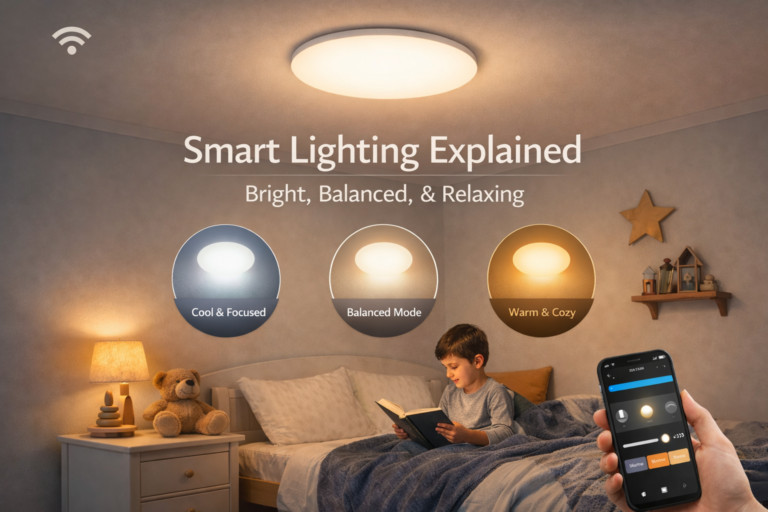
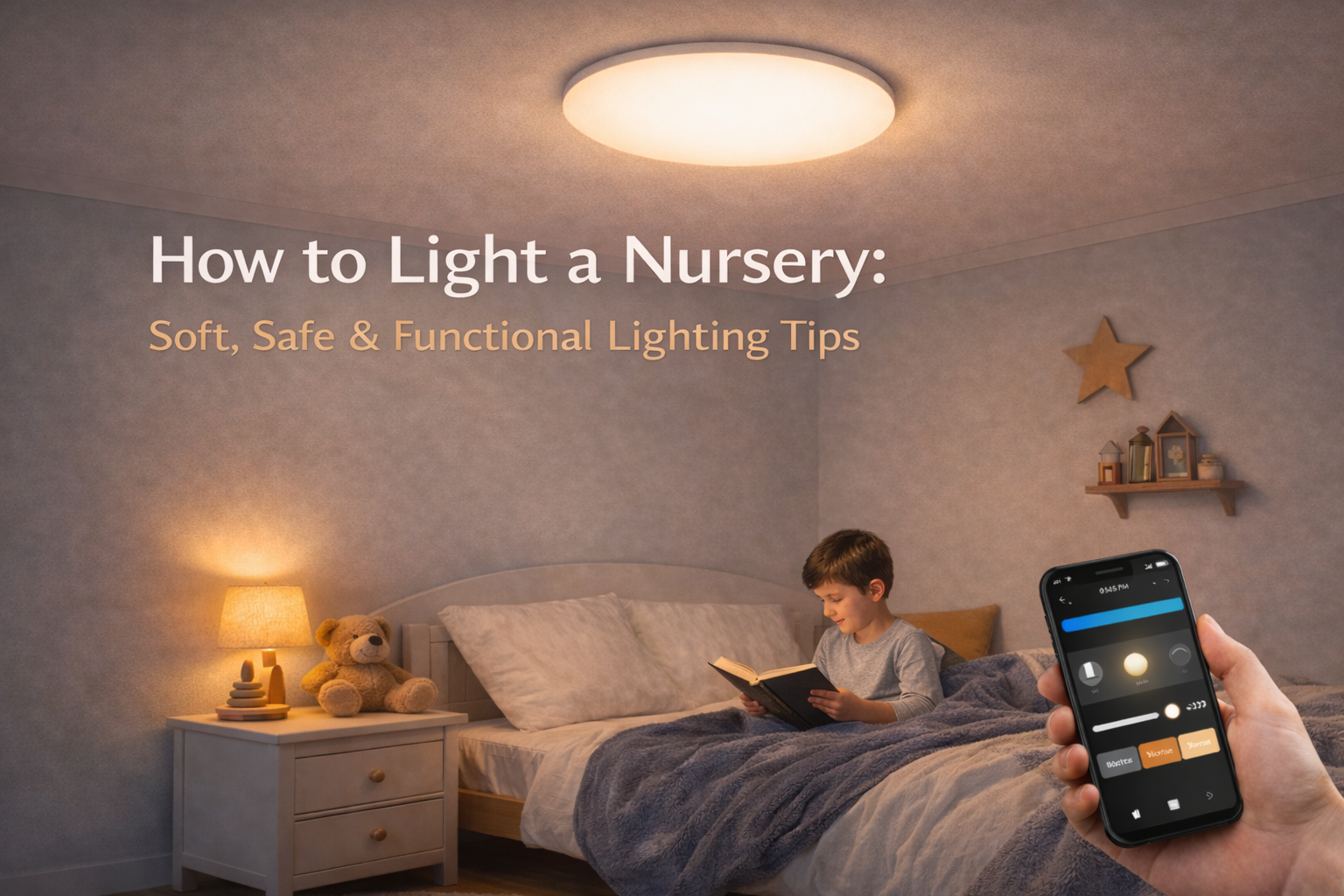
Smart nursery lighting systems can simplify daily routines. With app or remote control access, parents can:
-
Adjust brightness without entering the room
-
Set bedtime lighting schedules
-
Switch to night mode instantly
-
Create preset “Sleep,” “Feed,” or “Play” modes
Smart lighting helps create consistent sleep cues — which is especially helpful during sleep training stages.
7. Balance Natural Light During the Day
Daytime lighting is just as important.
-
Maximise natural daylight exposure
-
Use soft curtains to diffuse harsh sunlight
-
Avoid complete darkness during naps
Exposure to natural light during the day supports healthy sleep patterns at night.
Final Thoughts: Creating a Calm & Functional Nursery
The ideal nursery lighting setup is:
✨ Soft enough to soothe
✨ Functional enough for parents
✨ Safe and secure
✨ Adjustable for different times of day
By layering warm ambient light, dimmable features, gentle night lighting, and practical task lights, you can create a nursery that supports your baby’s sleep — and makes those midnight moments easier.
If you’re designing your baby’s room, consider smart, dimmable LED ceiling lighting that grows with your child from newborn to toddler years.
FAQs About Nursery Lighting
What colour temperature is best for a nursery?
Warm white lighting (2700K–3000K) is ideal for creating a calming environment.
Is a night light necessary for a nursery?
Yes, a soft night light helps parents move safely without fully waking the baby.
Are LED lights safe for nurseries?
Yes — high-quality LED lights are cool to touch, energy efficient, and long lasting.
#NurseryLighting
#BabyRoomLighting
#ParentingTips
#NurseryDesign
#SmartLighting
#BabySleep
#NewParents
#HomeLighting
#KidsRoomDesign
#Nestlight