As parents, our home safety checklist is never-ending. We baby-proof the corners, anchor the bookshelves, and install the safety gates. But one area that often gets overlooked is right above our heads: the lighting.
With the shift from traditional bulbs to LED technology, many Australian parents are asking: Are LED ceiling lights safe for children’s bedrooms and play areas?
The short answer is yes—in fact, high-quality LEDs are the best lighting for nurseries and playrooms. However, not all LEDs are created equal. Here is the breakdown of what you need to look for to keep your little ones safe and sleeping soundly.
1. The “Touch Test”: Why Cool is King
One of the biggest hazards of traditional halogen or incandescent bulbs is heat. These bulbs can reach temperatures high enough to cause serious burns or even start a fire if they come into contact with fabrics.
LEDs, like the high-performance flexible LED strips used in our Nestlight fixtures, operate at a significantly lower temperature. They remain cool to the touch even after hours of use. This makes them the safest choice for kids’ rooms, where curiosity often leads to little hands exploring things they shouldn’t.
2. Shatter-Proof Design for Active Play
Active kids and fragile glass are a recipe for disaster. Traditional “designer” fixtures often rely on thin glass that can shatter into dangerous shards if hit by a toy or a stray ball.
Modern LED solutions allow for much more durable, kid-friendly designs. For example, our sculptural Nestlights are crafted from braided fabric-covered LEDs and solid brass. There are no exposed glass bulbs to break, providing peace of mind in high-activity zones like playrooms.
3. No Mercury, No Toxins
Unlike older Compact Fluorescent Lamps (CFLs), which contain small amounts of mercury vapor, LEDs are mercury-free. If a light does break, there is no risk of toxic chemical exposure to your children or pets. For a health-conscious Australian home, choosing mercury-free LEDs is a simple way to protect your indoor air quality.
4. Protecting Little Eyes: Blue Light & Sleep
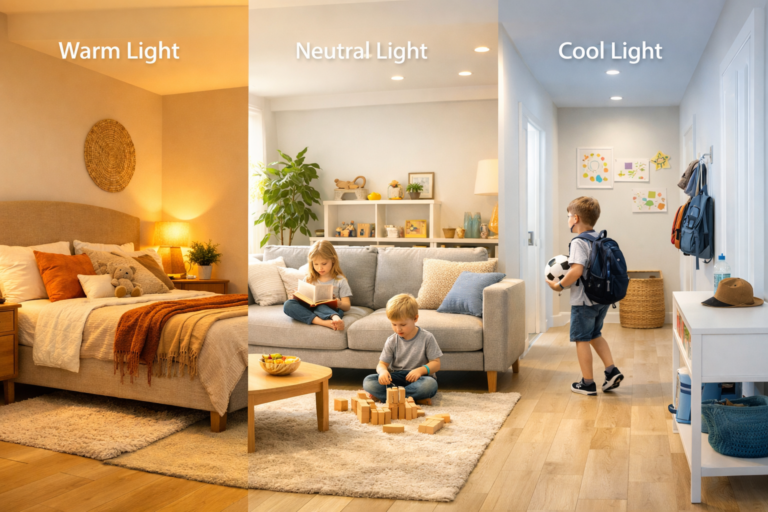
A common concern for parents is “blue light” and its effect on sleep. While cool, blue-toned light can suppress melatonin (the sleep hormone), the solution is found in Color Temperature.
For children’s bedrooms, we recommend “Warm White” tones (2700K to 3000K). These mimic the soft glow of a sunset, signaling to a child’s brain that it’s time to wind down. Using dimmable LEDs for kids allows you to lower the light levels during the “golden hour” before bed, which helps regulate their natural circadian rhythm.
Learn more about Choosing the right Colour Temperature
5. Built for Australian Standards
In Australia, we have some of the strictest safety standards in the world. When choosing lighting, ensure the products are designed for the Australian climate and meet local electrical regulations.
Nestlight is a family business based in Melbourne. Every piece is artisan-made with a focus on quality and longevity. By choosing locally designed lighting, you aren’t just getting a beautiful piece of art; you’re ensuring that the electrical components are safe, regulated, and built to last in Australian homes.
Frequently Asked Questions
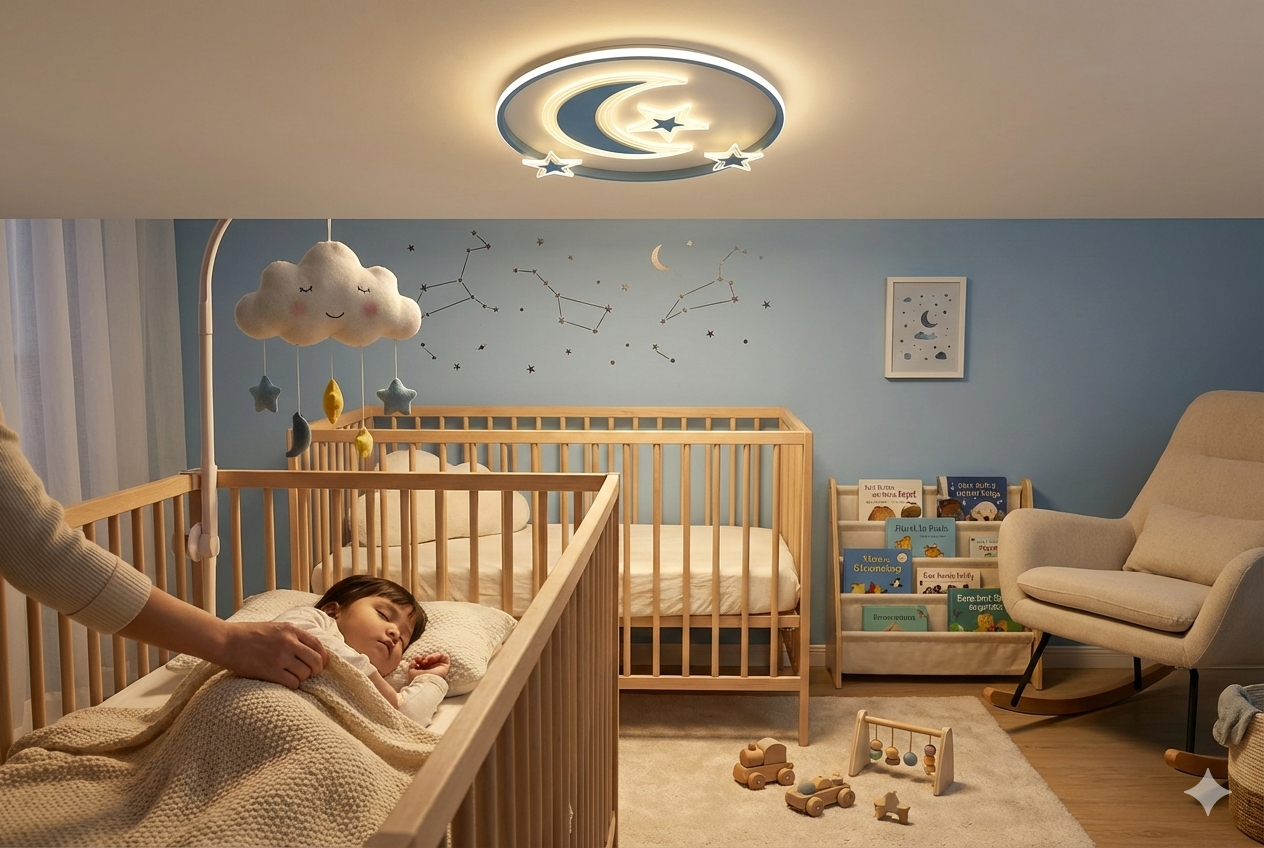
Can I leave LED lights on all night in a nursery? Yes, because LEDs produce very little heat, they are safe to leave on as a low-level nightlight. We recommend using a dimmable fixture to keep the light level at a minimum to support deep sleep.
Are LEDs bad for a baby’s eyes? High-quality LEDs with a high CRI (Color Rendering Index) provide a steady, natural light that is gentle on developing eyes. Avoid “flickering” cheap bulbs and stick to high-end, regulated LED technology.
The Verdict
LEDs are the safest choice for a child’s environment, provided you choose high-quality, Australian-standard fixtures. They offer low heat, durability, and non-toxic materials for a healthier home.
Ready to light up your nursery with a piece of functional art? Explore the Nestlight Collection